 Proudly Albertan

When a child inherits money or property, deciding who will manage those assets is just as important as deciding who receives them. Minors may not have the legal capacity to manage an inheritance independently, making trusteeship an essential part of estate planning. For parents and grandparents preparing for the future, consulting wills and estate lawyers Edmonton families can turn to can help clarify who should oversee a child’s inheritance and how those assets should be protected.
For parents and grandparents planning their estates, understanding the difference between a guardian, executor, and trustee can help protect a child’s financial future.

Why Does a Minor Need a Trustee?
In Alberta, a minor is normally a person below 18 years old. When a child inherits something, the inheritance can be managed on behalf of that individual until he or she reaches adulthood or another age as outlined by the specific legal document.
The task of managing the inherited money or property belongs to the trustee in line with the will, court order, or other legal considerations. This can include ensuring that the money or property is safe, making investments where necessary, and ensuring proper payments.
Where a will or other legal document does not specify a trustee, the Public Trustee may be mandated to manage the assets, with some exceptions. It is also possible for a parent or guardian to apply to the court for the role of trustee.
Trustee, Guardian, and Executor: Understanding the Difference
These roles serve different purposes, even though one person may sometimes hold more than one responsibility.
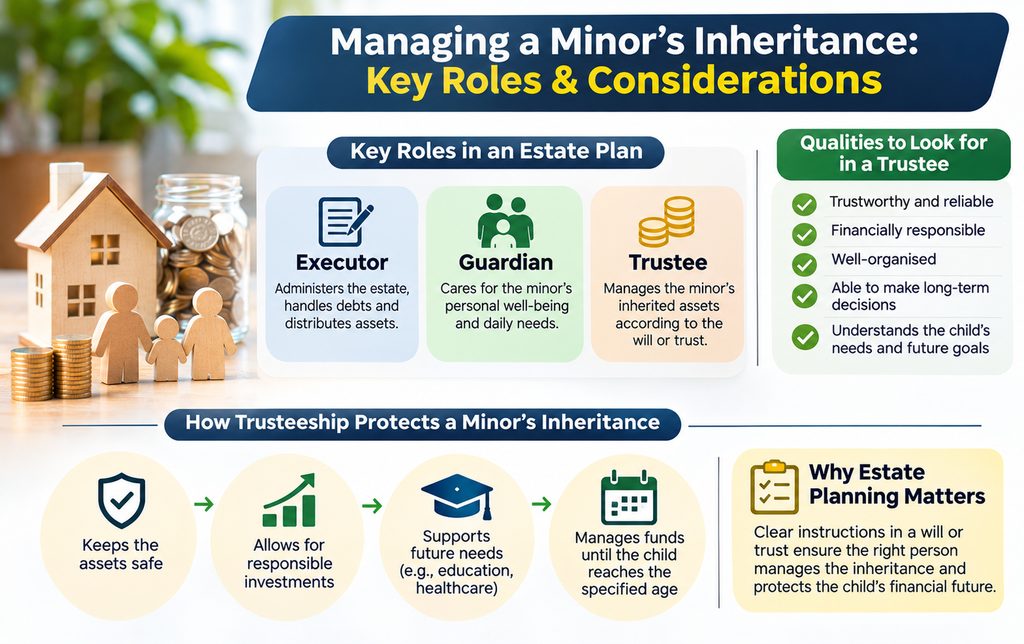
- Executor (personal representative): Administers the deceased person’s estate, handles debts and obligations, and distributes assets according to the will.
- Guardian: Looks after a minor’s personal care and day-to-day needs. A will can nominate someone to act as guardian, although the appointment is subject to applicable legal requirements.
- Trustee: Manages the minor’s inherited financial assets and uses them according to the trust’s terms and the child’s interests.
Naming a guardian does not automatically make that person the trustee of the child’s inheritance. Clear estate planning helps prevent confusion between these responsibilities.
What Should You Consider When Choosing a Trustee?
Selecting the right trustee is also a difficult task. You need to think about selecting someone who is trustworthy, financially responsible, organised, and able to make decisions over an extended period of time.
It is also necessary to think about what purpose the inheritance must serve. For instance, the will may give information regarding the payments for education, health, and other things. It can also say when the remainder of the inheritance must be given to the beneficiary.
Seeking guidance from wills and estate lawyers in Edmonton helps ensure these arrangements are properly documented and reflect the estate owner’s intentions.
How Can Estate Planning Lawyers Help?
Here at Peter B Mason Real Estate Lawyers, we assist our clients in issues pertaining to wills, estate planning, trusteeship, guardianship, and probate. We know that dealing with the inheritance of a minor is not just about selecting a beneficiary but entails detailed directions as to how the funds will be managed. It requires clear instructions about who will manage the assets and how the child’s interests should be protected.
Working with wills and estate lawyers Edmonton residents can approach for estate planning guidance can help you prepare a will that addresses these important responsibilities. We can also assist with understanding trusteeship and the legal steps involved.
Frequently Asked Questions
Can a minor receive an inheritance in Alberta?
Yes. A minor can inherit money or property, but arrangements may be needed for an adult or the Public Trustee to manage the assets.
Can a parent manage a child’s inheritance?
A parent or guardian may manage certain funds in applicable circumstances. If no trustee is named, a court application may be necessary, depending on the situation.
Does a guardian automatically become the trustee?
No. Guardianship and trusteeship are separate roles. The will or appropriate legal process should address who manages the child’s finances.
When does a minor receive control of the inheritance?
This depends on the terms of the will, trust, or court order and applicable law. The arrangement may continue beyond age 18 if the governing document provides for it.
Planning today can make a meaningful difference to a child’s financial future. Contact Peter B Mason Real Estate Lawyers to discuss your estate planning needs. Our team is here to help you create clear, practical arrangements for the people who matter most.